
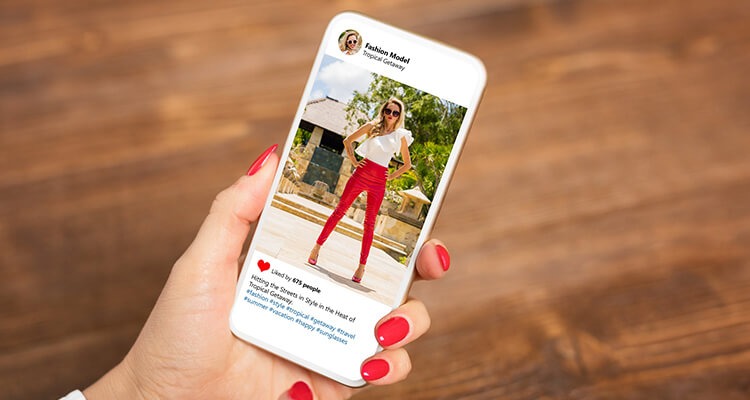
As social media has become an ever-bigger presence in our everyday lives over the past decade or so, new previously non-existent careers have emerged, among them is the social media influencer.
Put simply, a social media influencer is someone with a large and highly engaged following who uses that position to market and sell certain products and services. Effectively using their influence to convince their followers to buy the products or brands they promote. Usually this is in return for a fee or a cut of sales produced as a result of their influence.
For some brands this method of marketing is both highly effective and highly attractive.
But there are, as with most methods of marketing, pros and cons attached and if you’ve never used influencers before it is a good idea to properly consider these factors before embarking on the journey into the unknown.
The Cons
The main downsides to influencer marketing revolve around the expense and the actual effectiveness of the marketing activity itself. Much like most other forms of marketing. Don’t be sucked in by the glamor of it.
It can become expensive
Influencers get paid in a variety of ways, but those with the largest social media followings (1m followers+) will usually charge a flat fee per post they put up on top of a percentage earning on all sales generated. Over time, this can become a fairly substantial cost and even just the cost of the posts themselves can run anywhere between £250 and £1,000 each on average.
There are no guarantees
As with all marketing activity there are no guarantees that the influencer’s followers will actually want the product they’re promoting. It could just drop off into cyberspace and dwindle into nothing taking your money with it.
It can be difficult to find the right influencers
Influencers exist in numerous spaces and niches within social media, they have different numbers of followers and different levels of engagement and differing levels of influence over their followers. The hot girl might have 2m followers, but there’s a very strong likelihood that most of them are just there to look at her pictures and will pay little or no attention to any products she’s marketing. That is not to say that the exposure won’t pay long-term dividends to your business, but if you need to produce sales or enquiries, you might find that such influencers are wrong for you. It really depends what you are selling, what your product or service is, some are of course completely unsuited to influencer marketing of any kind.
Partnering with the wrong influencers can damage your brand
Following on from the above, choosing the wrong kind of influencers can in fact be damaging to your brand. It can show it as cheap or mediocre, it can present an image that completely flies in the face of what you are really all about. If you’re a high-end lifestyle brand for example, do you want your brand being promoted alongside lots of sports equipment or barely SFW selfies?
Research is showing a reduction in influencer engagement rates
In an article written by Forbes in 2020 a significant reduction in the engagement levels of influencer social media posts across the board was noted. Reasons for this are fairly ambiguous, but it is no small factor that the number of influencers on social media has grown to such proportions that overall user interest has dropped. On top of which people have begun picking up on the fact that many of these influencers are just there to sell them things.
There is a lack of research on influencer impact on men’s purchasing
If your product or service is a male-focused brand, then there is a large absence of research to vindicate or indeed challenge the validity of influencer marketing. The general consensus of opinion is that influencer marketing has a significantly lower impact on men than it does on women. But with a dearth of empirical data one way or the other it can be little more than a gut feeling risk to take.
Tracking and measuring influencer marketing results can be difficult
Most marketing activity can be tracked and measured quite well, and there are of course ways to help you measure influencer marketing effectiveness. However, due to the fact that it is based on influence, its real effect can be difficult, if not impossible, to quantify.
The Pros
As with all methods of marketing there are of course upsides, pros and good reasons to consider the use of influencers in your marketing mix. Primarily this focuses around the ability to make a personal connection with your target market.
Influencers can help you reach the right people
Successful influencers often have a good, loyal core of engaged followers and advocates. The right match with your brand or product can propel you into the consciousness of large numbers of your target audience.
It helps build brand awareness and trust
People tend to trust the influencers they follow and automatically presume any product or service they promote to be good, credible and worthwhile. As a result your product or brand can more quickly win the approval of your prospective customers by trading on the trust that the influencers have developed with their following. You also reach a wide audience without having to build your own to the same size that the influencers have already spent years doing.
Women are very engaged with influencers
Where there is a lack of research on male influencer effectiveness, there is a good amount for women. An eMarketer poll of 22,000 women returned a result that 45% of them would buy a product recommended by an influencer. Therefore, if your product or brand is female-centric and aimed at women influencer marketing research would suggest that it could very well be a good way to go.
You get a good ROI
Studies have shown that the typical return on investment for influencer marketing is around £5.78 for every £1 spent. This alone would suggest that it is a highly effective marketing method, but this is overall and, as mentioned, there are many products, brands or services that just don’t lend themselves to influencer marketing at all. It should be noted that the ROI has been shown to be even better with micro-influencers (those with a following of 50,000 or less).
It has been shown to cut lead time
Following on from the trust factor, influencer marketing has been shown to cut lead times and improve conversion ratios. This is directly related to the fact that the customers have usually already made a purchase decision just from the influencer posts and therefore are ready to buy and happy to go ahead, they’re not so much leads as ready-to-buy customers.
They can create the content for you
Most influencers, especially those more established or more professional, are very sure to maintain control of their content and ensure what they post is carefully choreographed and considered. This maintains a control of their own brand, which is what they are trading on. As such, they’ll usually create the content for the posts for you. You’ll simply give them the message you’re trying to get across and they’ll do the rest. Though it is often the case that they will control it all entirely.
As you can see, there are a variety of ways in which influencer marketing may or may not be the right fit for your business. If it is something you’re interested in exploring please get in touch today for a free consultation.
